Bed Bug Blog
Bed Bug Heat Treatment for Nashville Hotels and Short-Term Rentals
November 1, 2026
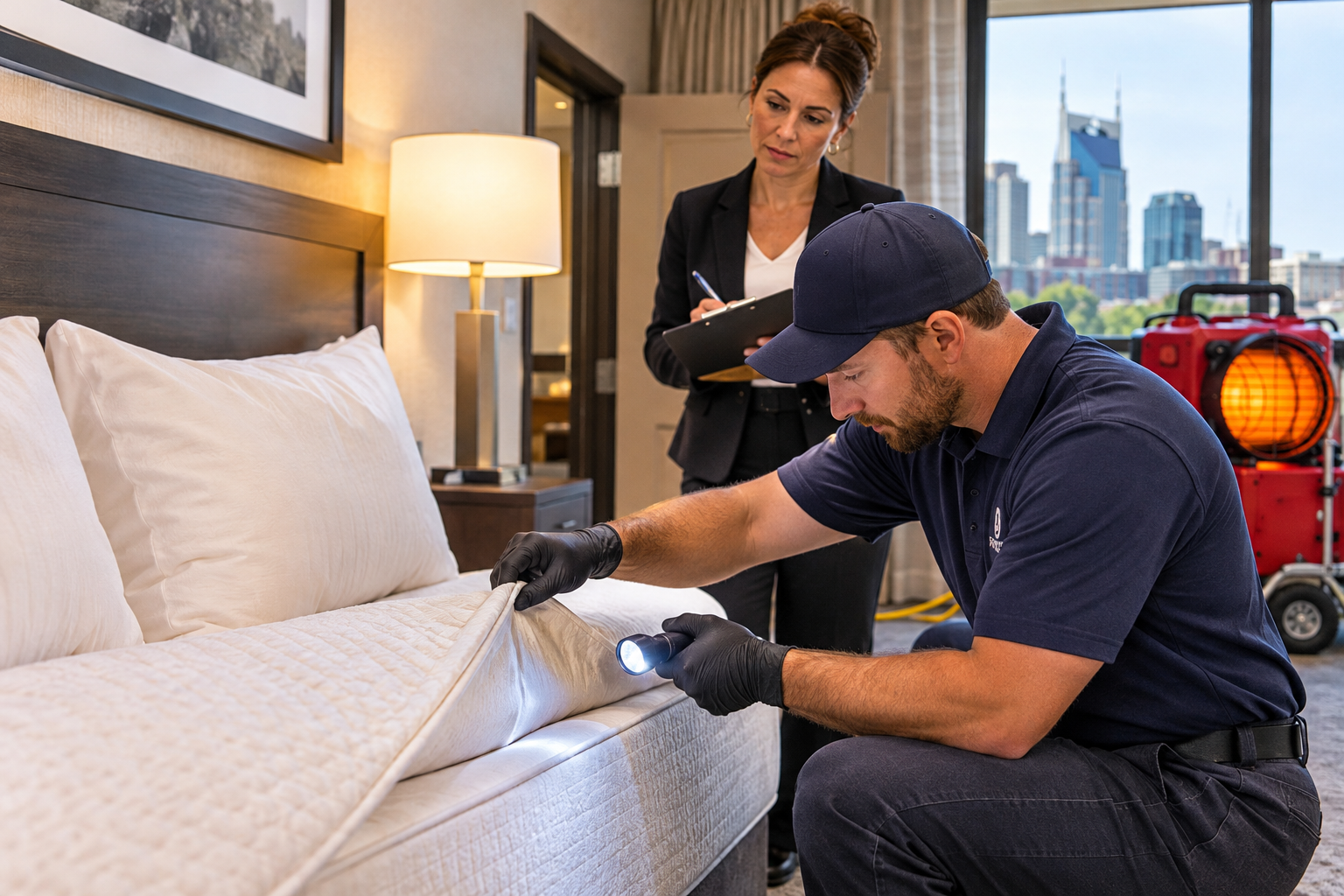
A bed bug report is one of the last things a hotel manager or short-term rental host wants to receive. It can affect guest confidence, staff operations, reservations, and online reviews—even before an infestation is confirmed.
The best response is prompt, professional, and documented. Nashville Bed Bugs works with residential and commercial properties in Middle Tennessee, including hospitality businesses that need a practical plan for investigating and addressing bed bug activity.
Why Bed Bug Reports Matter in Hospitality
Hotels, boutique inns, Airbnb properties, and vacation rentals experience frequent guest turnover. Bed bugs can arrive in luggage, personal belongings, or furnishings, regardless of how clean or well-maintained a property is.
A report can create immediate operational questions: Should the room be taken out of service? Do adjacent rooms need inspection? How should staff handle linens and guest belongings? When can the property accept another reservation?
Answering these questions systematically helps protect guests and reduces the risk of making the problem worse.
What to Do When a Guest Reports Possible Bed Bugs
1. Respond promptly and professionally
Thank the guest for bringing the concern to your attention. Avoid dismissing the report or confirming an infestation before an investigation. Ask what the guest observed and whether they have photographs or a specimen.
2. Limit use of the affected room
Consider taking the room out of service while the concern is investigated. Restrict unnecessary housekeeping, maintenance, and guest traffic until the appropriate next steps are established.
3. Handle relocation and belongings carefully
If a guest must move, consider the potential for bed bugs to travel in luggage or clothing. Avoid automatically relocating the guest to an adjacent room. Seek professional guidance about containing and handling potentially exposed belongings.
4. Document the report
Record the date, room or unit, observations, photographs, staff actions, and any guest relocation. Maintain a consistent record of inspections and subsequent decisions.
Bed Bug Bites Alone Do Not Confirm an Infestation
Guests may first suspect bed bugs after noticing itchy marks. However, skin reactions vary widely, and bites or rashes can have several causes. Some people show no visible reaction to bed bug bites.
Look for physical evidence such as live insects, shed skins, eggs, or characteristic spotting in mattress seams, headboards, bed frames, and nearby furniture. A professional inspection can help identify the pest and determine the appropriate response.
Where Bed Bugs Hide in Hotel Rooms and Rentals
Bed bugs tend to stay close to resting areas, although they can spread beyond the bed. Potential hiding places include:
- Mattress seams and box spring edges
- Headboards, bed frames, and furniture joints
- Nightstands and upholstered chairs
- Baseboards and wall-floor junctions
- Luggage racks and nearby furnishings
- Cracks and sheltered areas near sleeping spaces
Staff should report suspicious evidence rather than moving furniture or belongings between rooms.
How Professional Bed Bug Heat Treatment Works
Professional heat treatment uses commercial-grade heating equipment, airflow management, and temperature monitoring to bring treated areas to conditions lethal to bed bugs.
Unlike simply warming a room, effective heat treatment requires technicians to monitor temperatures in relevant locations and account for furnishings and areas where bed bugs may shelter. The treatment plan depends on the property layout, infestation evidence, and contents.
For hospitality operators, heat treatment may offer a practical way to address an affected room and appropriate contents together. It is not a do-it-yourself procedure using household heaters, and no responsible provider should promise a universal treatment duration or reopening time without evaluating the property.
Does the Entire Hotel Need Treatment?
Not necessarily. A confirmed problem in one room does not automatically mean every room is infested. However, limiting treatment to one room without considering surrounding spaces can overlook activity elsewhere.
Depending on the building and evidence, a professional may recommend checking neighboring rooms, including rooms beside, above, or below the affected area. Shared walls, utility pathways, guest movements, and housekeeping practices can influence the assessment.
The objective is to establish an appropriate treatment scope based on findings rather than assumptions.
Coordinating Treatment Around Reservations
Hotels and short-term rentals have scheduling considerations that differ from those of private homes. Managers may need to coordinate guest relocation, room access, housekeeping, maintenance, and upcoming check-ins.
Provide your treatment company with the property type, affected room or unit, available inspection evidence, adjacent spaces, and occupancy constraints. Ask when the team expects to assess the space and what conditions must be met before reopening.
Avoid promising guests or booking platforms a specific reopening date until the treatment provider has evaluated the property and confirmed the plan.
Preventing Bed Bugs From Spreading During Housekeeping
Housekeeping teams play an important role in recognizing potential infestations and avoiding unnecessary movement of exposed items.
- Train staff to recognize common signs of bed bugs.
- Report suspected activity promptly.
- Avoid transferring potentially infested linens, furniture, or supplies into unaffected rooms.
- Follow containment and laundry procedures recommended by the treatment provider.
- Inspect used furnishings before bringing them into guest accommodations.
- Keep inspection and incident records accessible to authorized managers.
These practices can reduce opportunities for spread, although no prevention program can guarantee that bed bugs will never be introduced by a guest.
Keep a Documented Bed Bug Response Plan
Whether you manage a single Airbnb or a hotel with many rooms, a written response process can help staff act consistently.
Consider maintaining records of guest reports, inspections, rooms evaluated, treatment dates, follow-up recommendations, and relevant staff communications. This information can help identify recurring problems and support operational decisions.
Frequently Asked Questions
Should we close an entire hotel after one bed bug report?
Not automatically. The appropriate response depends on the inspection findings, building layout, and potential spread. An affected room may need to remain out of service while the situation is evaluated.
Can we confirm bed bugs from guest bite photographs?
No. Skin reactions alone are not reliable confirmation. Inspection and identification of physical evidence are important.
Can professional heat treatment help us return a room to service?
Heat treatment can be part of an effective eradication plan. The timing of reoccupancy depends on the treatment, safety requirements, inspection findings, and any follow-up recommendations.
Professional Bed Bug Treatment for Nashville Hospitality Properties
Nashville Bed Bugs specializes in professional bed bug heat treatment and eradication for residential and commercial properties throughout Nashville and Middle Tennessee.
If you manage a hotel, boutique inn, Airbnb, VRBO, or vacation rental, contact us to discuss the suspected activity, property layout, and scheduling requirements. We can help determine appropriate next steps based on your situation.